Comparison Guide
Full-service design vs e-design: choose the support level that matches your project
Both options can work well. The right choice depends on the complexity of the home, the amount of construction involved, and how much of the implementation you want to manage yourself.
How to frame the decision
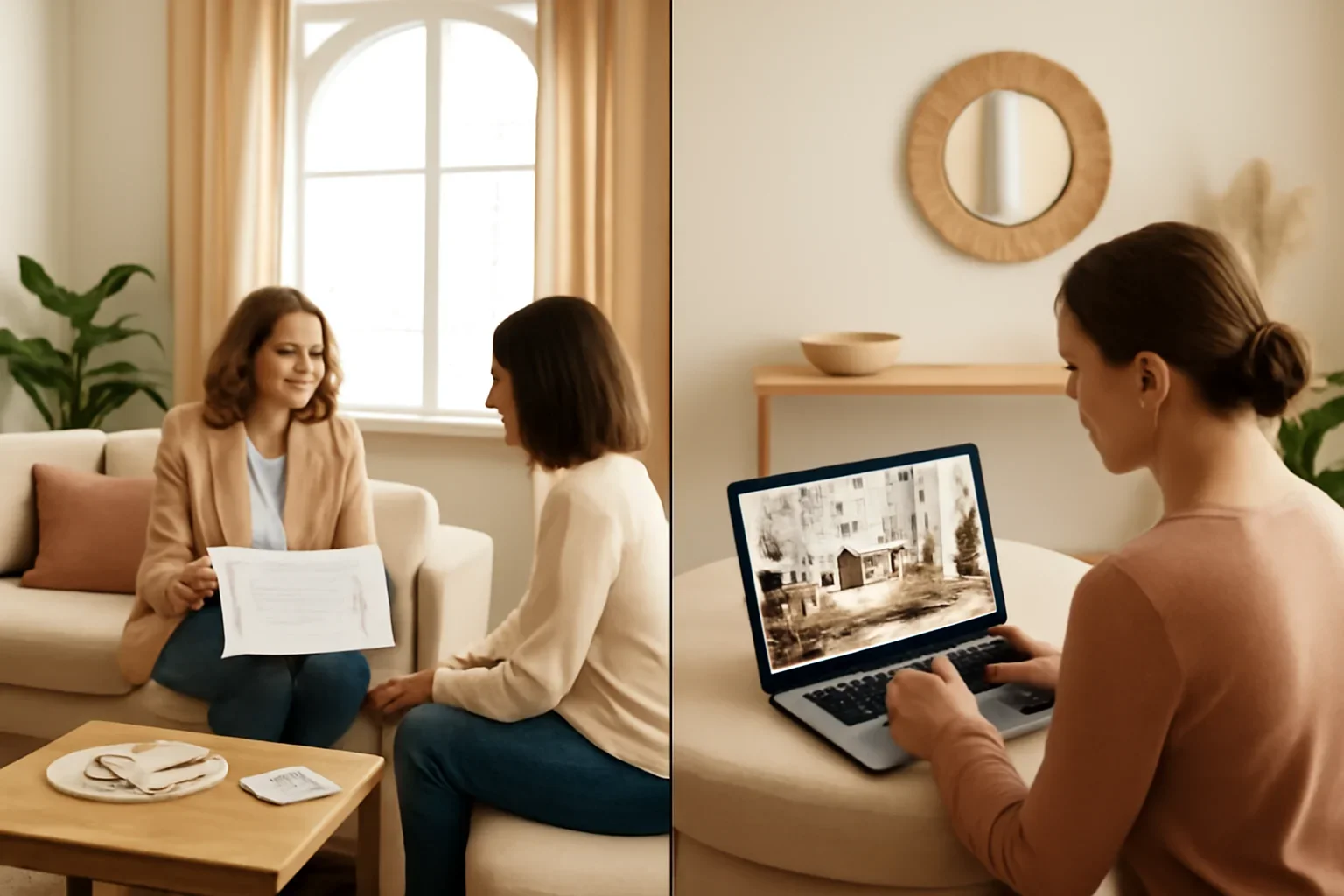
Full-service design offers a more hands-on role across planning, selections, sourcing, and coordination. E-design provides a lighter virtual format that can be ideal for focused rooms, furnishing plans, and projects where the client is comfortable handling more of the implementation independently.
Neither format is automatically better. The better option is the one that matches the scope and the level of support you actually need.

Side-by-side view
| Comparison point | Option A | Option B |
|---|---|---|
| Service format | Remote and plan-focused | More comprehensive and often more involved from concept through execution |
| Best for | Defined rooms, refreshes, furnishing, lighter scopes | Renovations, multiple rooms, procurement-heavy projects, or projects with many moving parts |
| Client role | More self-managed implementation | More support with decisions, sourcing, and coordination |
| On-site involvement | Minimal or none | Can include site-related coordination depending on scope |
| Budget level | Often more accessible | Usually a larger investment because the role is broader |
Apply the comparison to your own project
If you want help deciding between the two, our consultation page is the best starting point. We can look at the scope and recommend the service path that fits rather than overbuilding the project.
A short consultation can often make this decision much easier because it puts the choice in the context of your home rather than general advice.